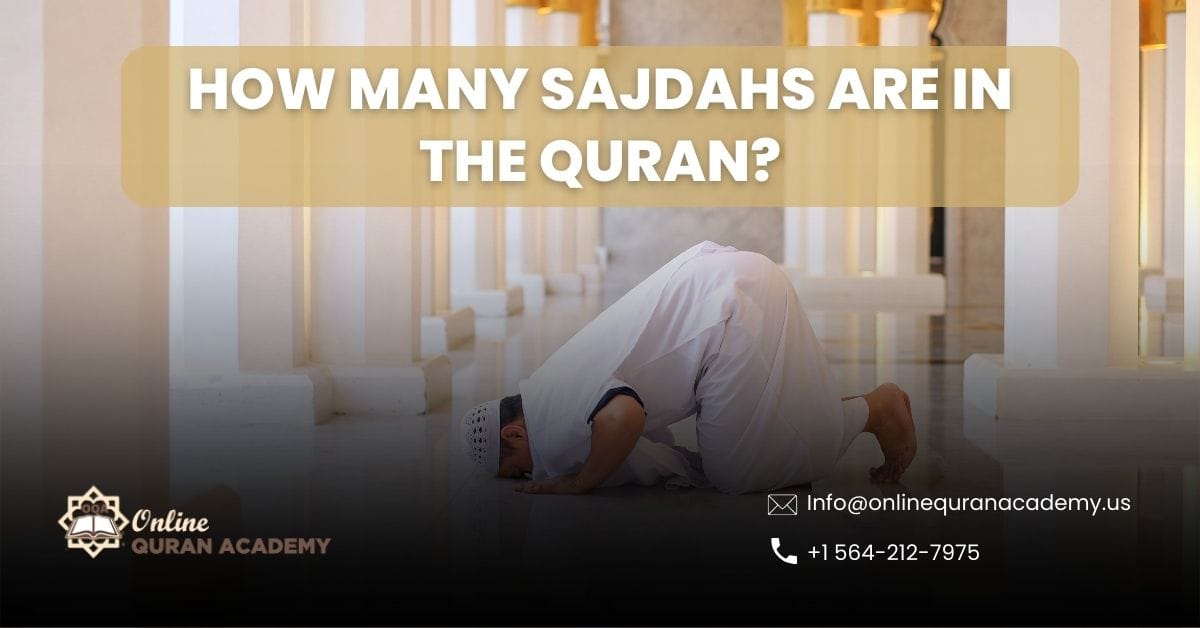
One of the most frequently asked questions among Muslims and students of the Quran is: “Are there 14 or 15 Sajdahs in the Quran?” Sajdah (prostration) represents a profound act of submission in Islam, and the verses in the Quran that mention it hold deep spiritual significance.
In this article, we will examine the concept of Sajda-e-Tilawat, clarify the correct number of prostration verses, and discuss their importance to enhance your understanding of this meaningful act of worship.
What Is Sajda-e-Tilawat?
Sajda-e-Tilawat, also known as the Prostration of Recitation, is a specific prostration performed when a person recites or listens to certain verses in the Quran that require sajdah. These verses are found in different chapters of the Quran and represent total submission and devotion to Allah. Performing Sajda-e-Tilawat demonstrates a believer’s humility, obedience, and respect for the command of Allah.
How Many Sajdahs Are in the Quran – 14 or 15?
Many Muslims often ask: Are there 14 or 15 Sajdahs in the Quran?
The majority of Islamic scholars recognize 14 prostration verses that are commonly agreed upon. However, there is an additional verse in Surah Sad (38:24) that some scholars — especially within the Hanafi school of thought — also count as a Sajdah, which makes the total 15.
This slight difference arises from variations in interpretation and scholarly methodology among the different schools of Islamic jurisprudence. Regardless of whether one follows the count of 14 or 15, each Sajdah verse carries profound spiritual importance and highlights the depth and reverence associated with Quranic recitation.
What Are the Three Types of Sajdah in Islam?
In Islamic teachings, Sajdah (prostration) is a deeply meaningful act of worship and submission. There are three primary types of Sajdah, each with its own purpose:
Sajda-e-Tilawat (Prostration of Recitation):
This prostration is performed when a person recites or hears particular verses of the Quran that require sajdah. It reflects immediate submission and response to the command of Allah.
Sajda-e-Shukr (Prostration of Gratitude):
This type of Sajdah is offered to express gratitude to Allah after receiving blessings, good news, or protection from harm.
Sajda-e-Sahw (Prostration of Forgetfulness):
This is performed during Salah (prayer) to make up for minor mistakes or forgetfulness within the prayer, helping ensure its completeness and correctness.
Which Is the First Sajdah in the Quran?
The first verse of prostration in the Quran is found in Surah Al-A’raf (7:206):
“Surely those ˹angels˺ nearest to your Lord are not too proud to worship Him. They glorify Him. And to Him they prostrate.”
— Surah Al-A’raf, 7:206
This verse marks the first of the Sajdah Tilawah verses and highlights the importance of humility and submission before Allah. It reminds believers of the angels’ constant obedience and devotion, setting an example for them to follow.
Dua for Sajda in the Quran (Sajda-e-Tilawat)
When performing Sajda-e-Tilawat, it is recommended to recite the following supplication (dua):
Arabic:
“سَجَدَ وَجْهِيَ لِلَّذِي خَلَقَهُ وَشَقَّ سَمْعَهُ وَبَصَرَهُ بِحَوْلِهِ وَقُوَّتِهِ، فَتَبَارَكَ اللَّهُ أَحْسَنُ الْخَالِقِينَ”
Reciting this dua during Sajdah reflects deep submission and thankfulness to Allah, adding sincerity and spiritual depth to the act of prostration.
How to Perform the 14 Sajdahs After Completing the Quran
After finishing the recitation of the entire Quran, many Muslims choose to perform the 14 Sajdahs of Tilawah as an expression of gratitude and devotion. This meaningful practice represents respect for the words of Allah and appreciation for His guidance.
To perform them, identify the 14 prostration verses indicated in the Quran (or 15, depending on your school of thought). At each marked verse, carry out Sajda-e-Tilawat, recite the recommended dua, and observe the proper manners of prostration. This act is considered Mustahab (recommended) and demonstrates humility and a strong connection with the Quran.
When Is Sajda-e-Tilawat Obligatory?
In the Hanafi school of thought, Sajda-e-Tilawat is considered obligatory (Wajib) when a Muslim recites, reads aloud, or hears a verse of prostration. In other schools, such as the Shafi’i and Maliki schools, it is regarded as highly recommended (Sunnah Mu’akkadah).
The prostration should be carried out as soon as the verse is encountered, whether during Salah or outside of prayer. Unnecessary delay is disliked, since the sajdah serves as an immediate response to Allah’s command at that moment.
How to Identify Sajdah Verses in the Quran
In most printed copies of the Quran, verses that require Sajda-e-Tilawat are marked with a prostration symbol (۩) in the margin. You may also notice a note written in Arabic, such as:
السجدة – “As-Sajdah”
This marking helps readers recognize when to stop and perform the required prostration.
For those using Quran apps or digital platforms, these verses are usually highlighted or made clickable, making them easy to identify.
How to Perform Sujud Tilawah (Prostration of Recitation)
Sujud Tilawah is a simple but spiritually uplifting act that demonstrates a believer’s obedience to Allah’s command. Follow these steps to perform it properly:
✅ Be in a State of Wudu (Ablution):
Just like Salah, Sujud Tilawah requires ritual purity. Ensure you have wudu before performing it.
🕋 Face the Qiblah:
Turn in the direction of the Kaaba in Makkah before going into prostration.
🗣 Say “Allahu Akbar”:
Recite “Allahu Akbar” and move directly into the sajdah position.
🤲 Recite the Recommended Dua:
“سَجَدَ وَجْهِيَ لِلَّذِي خَلَقَهُ وَشَقَّ سَمْعَهُ وَبَصَرَهُ بِحَوْلِهِ وَقُوَّتِهِ، فَتَبَارَكَ اللَّهُ أَحْسَنُ الْخَالِقِينَ”
🙌 Rise from Sajdah:
Say “Allahu Akbar” again while rising from prostration. There is no need to conclude with Tasleem unless you are performing it within Salah.
Conclusion
Understanding the method and purpose of Sajda-e-Tilawat strengthens your spiritual bond with the Holy Quran. Whether the total number is counted as 14 or 15 depends on scholarly interpretation, but what matters most is performing each sajdah with sincerity, humility, and love for the words of Allah.
Frequently Asked Questions (FAQ)
1. What is the spiritual importance of Sajda-e-Tilawat?
It represents immediate obedience, humility, and submission to Allah upon hearing or reciting His command.
2. Are there times when Sajda-e-Tilawat should not be performed?
Yes, it should be avoided during Makruh (prohibited) times, including:
- Sunrise
- Sunset
- When the sun is at its highest point (midday)
3. Can I perform Sajda-e-Tilawat without Wudu?
No, being in a state of wudu is required, similar to the conditions for prayer.
4. If I am listening to the Quran and hear a Sajdah verse, do I need to prostrate?
Yes. If you recognize that the recited verse requires sajdah, it becomes necessary to perform it — even as a listener.
5. How many Sajdahs are recognized by Hanafi scholars in the Quran?
The Hanafi school commonly recognizes 14 Sajdahs, although some also include Surah Sad (38:24), which brings the total to 15 in certain views.
6. What should be recited during Sajda-e-Tilawat?
You should recite the recommended dua mentioned above as an expression of devotion and gratitude to Allah.